Since
50
years
Search
Popular searches
Categories
Results View all results
No rug matches this search.
Need tailored advice for your interior?
Oriental rugs in Geneva for 50 years
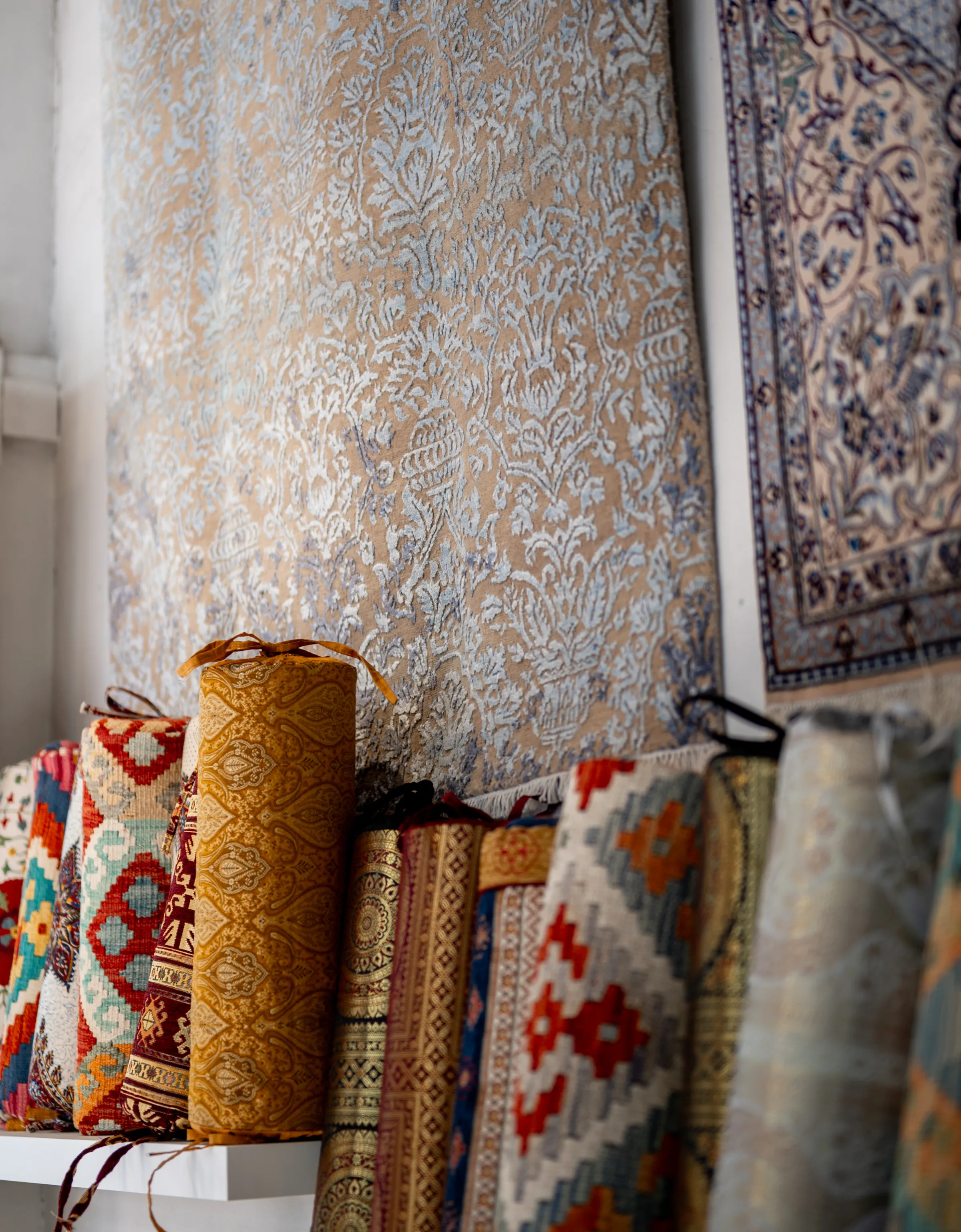
Fifty years ago, Amir Rasty opened his first rug shop in Geneva. He came from Iran, where his family had been weaving rugs for six generations. He grew up in that world, learning young how to knot, to mend, to weave, and to recognise an exceptional rug at a glance. Over the years he became a true authority on oriental rugs, recognised as an official appraiser for customs and insurers.
A family business in Geneva for over fifty years, with an exceptional collection and a rare command of the craft.
Since
50
years
Rug collection
10 000
pieces
Geneva showroom
1 200
m²
Everything you need to find the perfect rug.
The great rug collection of Amir Rasty & Filles
Official appraiser for customs and insurers
For more about rug sales at our Geneva shop or about our online store
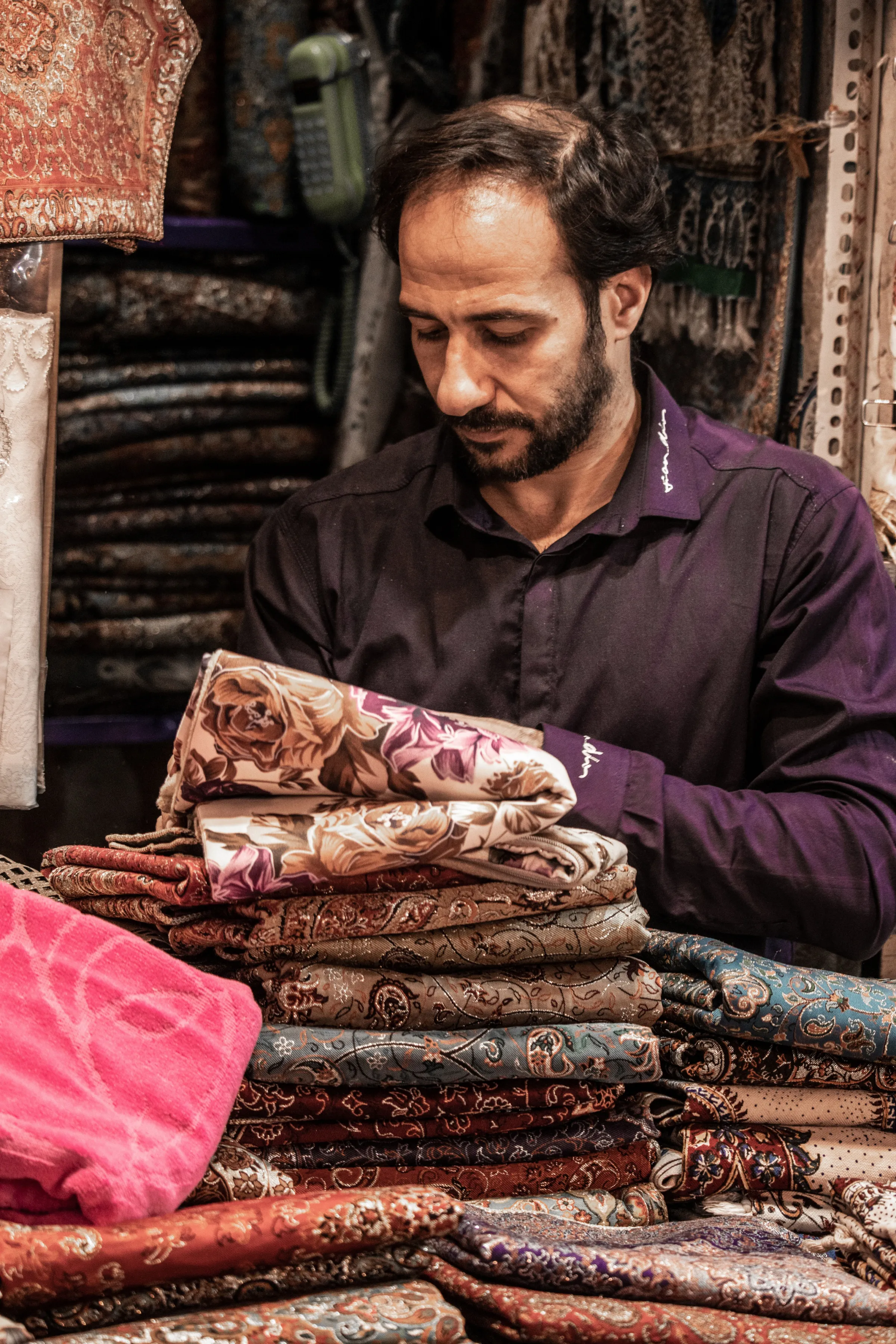
An oriental rug is made from three main materials. Wool — from sheep, goat or lamb — forms the pile; the most sought after, known as Kork, comes from the down of the lamb's neck. Cotton is used for the warp and weft, the invisible structure that gives the rug its stability. Silk, reserved for the finest pieces such as those from Isfahan, Nain or Qom, may be used alone for the most precious rugs, or blended with wool to lift the motifs.
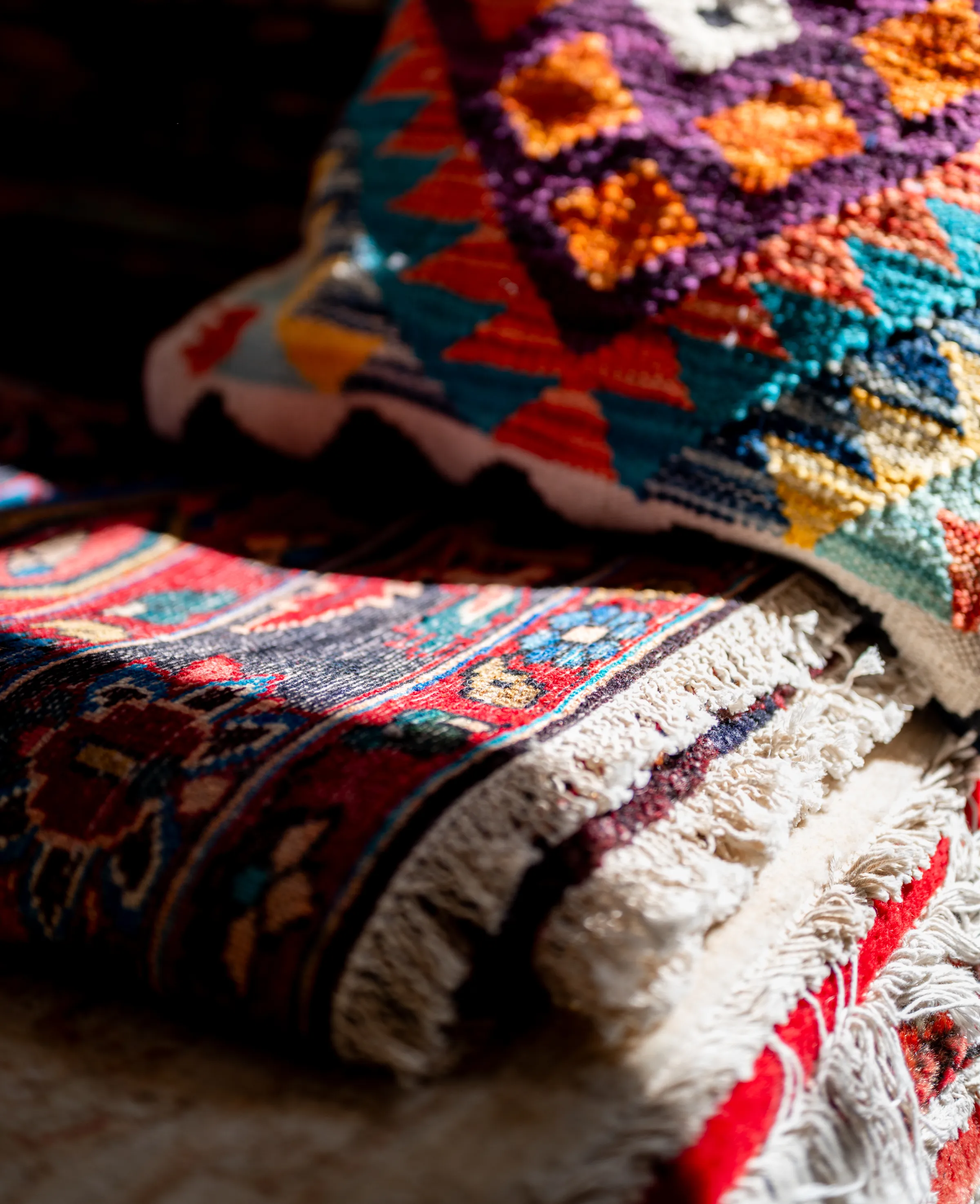
Once spun, the wool is dyed with natural colourants: madder for red, indigo for blue, saffron for yellow, walnut husk for brown, henna for orange.
On nomadic rugs, subtle variations of colour known as abrash sometimes appear: they come from successive dye baths, never quite identical. That is what makes each one singular.
On a vertical or horizontal loom, the warp threads are stretched, then the knotter ties the knots by hand, one by one, row after row. There are two main knots: the Ghiordes, symmetrical, known as Turkish, and the Senneh, asymmetrical, known as Persian. The finer and tighter the knots, the more precious and durable the rug.